
The Mistake Almost Everyone Makes First
The door won't lift, so the natural move is to hit the opener button again. And again. When that doesn't work, people switch to prying at the bottom with a shovel or crowbar, or they crank the emergency release and muscle the door up by hand as hard as they can. It's tempting because the door looks stuck on something simple—ice, debris, a stuck roller—and a little extra force seems like it should break it loose.
The problem is that an opener motor repeatedly straining against resistance can strip the drive gear, bend the trolley arm, or snap a cable that was already under tension. And prying at a door that's actually sealed to the slab by a thin sheet of ice can crack a wood panel or tear the bottom weather seal clean off its track. The fix is almost never more force. It's figuring out which of a handful of things is actually binding the door, starting with the most obvious.
Symptoms Worth Noting Before You Touch Anything
- Door won't move at all, even when disconnected from the opener and lifted by hand.
- Opener motor runs, but the door doesn't move, or moves only an inch before reversing.
- Door opens but drags or grinds, moving slower than usual on one side.
- Visible frost or a wet line along the bottom weather seal where it meets the concrete.
- Rollers look fine but still bind in the same one or two spots on the track every time.
The Causes, Checked in Order
1. The Bottom Seal Has Ice-Welded to the Slab
On a night that dips below freezing after a humid evening—which happens more than people expect in inland Marion County during a cold snap—condensation on the garage floor can freeze the rubber weather seal to the concrete. It's not thick ice, just a thin bond, but it's enough to hold the door down. The fix is simple: never pry it. Pour warm (not boiling) water along the seal line, or run a hair dryer along it for a few minutes, then try the door again. Boiling water can crack cold concrete or warp the seal, so skip that shortcut.
2. Springs Have Lost Some Tension in the Cold
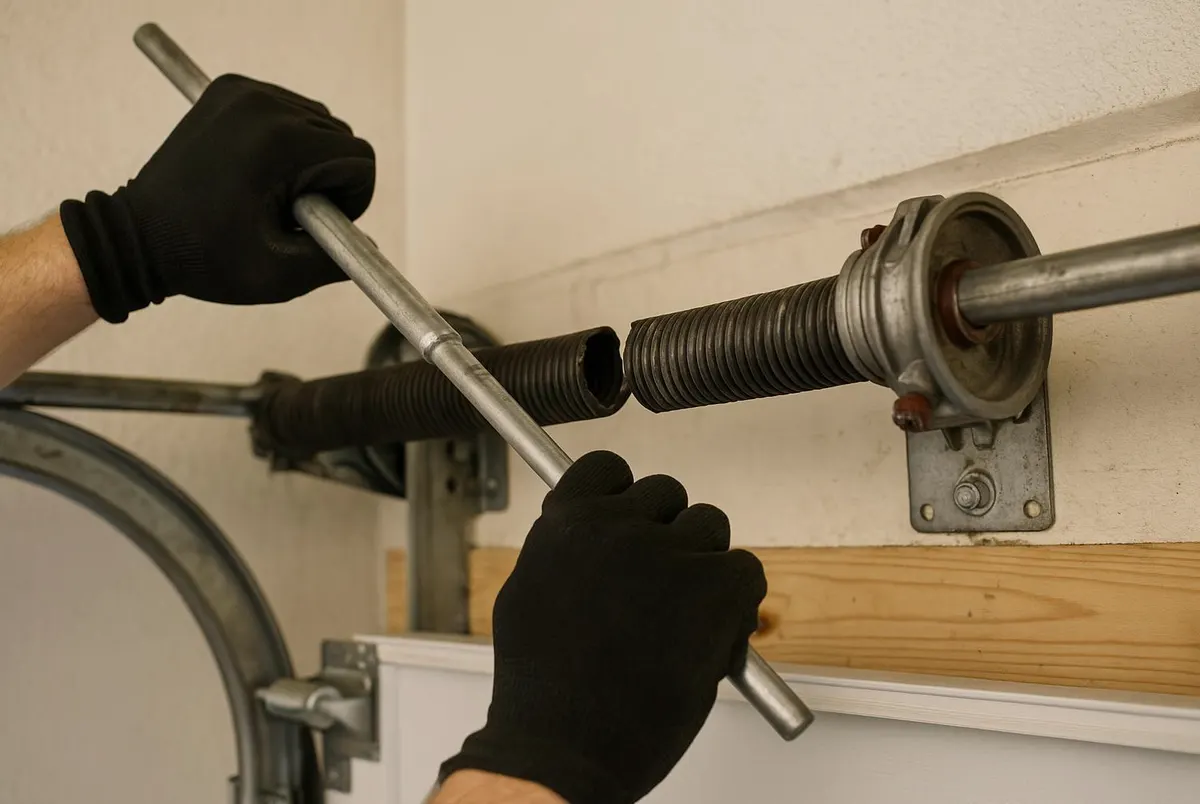
Torsion springs are metal, and metal contracts slightly in cold temperatures. More importantly, the lubricant packed inside the coils thickens when it's cold, which makes the spring work harder to do the same job. A door that normally feels light suddenly feels heavy, and the opener strains to compensate. This isn't something to adjust yourself—springs under tension are dangerous to touch without the right bars and training. A technician will check spring tension by hand-testing the door with the opener disconnected; if it doesn't hold itself halfway open, the spring needs a tune-up or replacement.
3. Track Alignment and Rust
Salt air and constant humidity are hard on galvanized tracks even without cold involved, and a freeze can make already-rusty spots bind tighter as the metal contracts. A technician runs a hand along both tracks, checking for rust pitting, bent sections, or spots where the rollers hang up. Minor rust gets cleaned and lubricated; a bent track gets straightened or replaced, since forcing rollers through a bent section repeatedly is what leads to an off-track door.
4. Lubrication Has Thickened or Washed Out
General-purpose grease and old lubricant thicken in cold weather, and humidity speeds up the breakdown of cheaper products. This shows up as rollers that squeak or drag even when the track is straight. The fix is a full relube of hinges, rollers, and the torsion spring with a silicone-based lubricant rated for temperature swings—petroleum-based products gum up faster in this climate's combination of heat, cold snaps, and moisture.
5. Opener Force Settings Are Tripping Early
If the door is working harder than usual for any of the reasons above, the opener's safety sensors may read that resistance as an obstruction and reverse the door before it fully opens. Once the mechanical issue is fixed, a technician checks and resets the force and travel limits so the opener isn't compensating for a problem that no longer exists.
When to Call Orange Springs Garage Door
If warming the seal doesn't free the door, or the door moves but feels heavy, loud, or uneven, stop testing it yourself. A stuck spring or a bent track can get worse fast if the opener keeps forcing it. Our Garage Door Spring Repair service covers safe tension adjustment and replacement, and our Garage Door Maintenance & Tune-Up catches rust, misalignment, and thickened lubricant before a cold snap turns them into a stuck door.
If your garage door in Orange Springs, Citra, Fort McCoy, or anywhere else in Marion County is dragging, sticking, or won't budge after a cold night, call Orange Springs Garage Door. We'll find the real cause and get it moving right, the first time.